
Leadership Begins Before Strategy
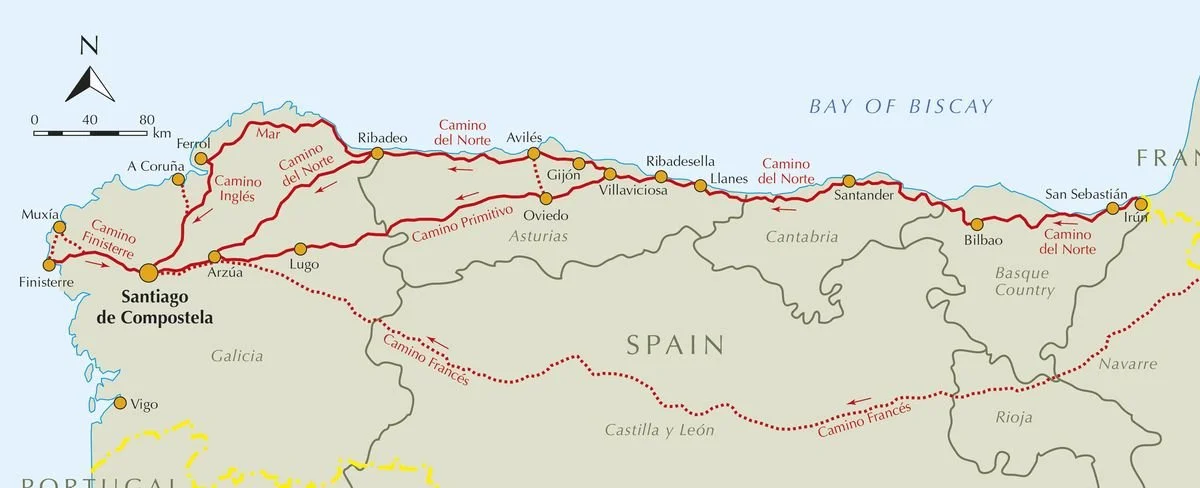
Map of the Camino del Norte including Finisterre and Muxia - just under 1100 km of walking
Leadership Begins Before Strategy
Leadership conversations often start with strategy, questions around what the plan is, the priorities, and the path forward.
Yet on a long walk, whilst you know where you are starting and where you will finish, it's important to appreciate that you walk in the condition you’re in, and that will greatly impact the experience of your walk. Fatigue, tension, mindset and unacknowledged strain don’t announce themselves on day one, but they shape every step that follows. Two people can walk the same path with the same map and experience it very differently.
Leadership is no different. Strategy may define the route, but the leader’s inner game determines how that route is walked and quietly sets the ceiling for performance long before execution begins.
Leadership Begins Before Strategy
There is a quiet assumption in many leadership conversations that performance improves once the right strategy is in place. That there will be clearer direction, sharper priorities and ultimately better execution. And yes, these 'outer game' elements will certainly help, but they are not the only elements at play.
And yet, time and again, I see well-designed strategies stall, not because they are flawed, but because the leader carrying them is too stretched, reactive under pressure (which might be showing up a lot for someone), or they are operating on autopilot because they just have to get stuff done.
Leadership really begins before strategy, before structure and before the next big initiative gets kicked off.
The Hidden Ceiling on Performance
Every leader has an unconscious, invisible ceiling on performance. This is not through ambition or intellect, but through their capacity to lead themselves under pressure.
Your inner game of leadership shapes:
how you make decisions when information is incomplete
how you show up in moments of tension, uncertainty or stress
what behaviours you tolerate, reinforce, or avoid
how safe it feels for others to think clearly and speak honestly around you
No strategy can rise above the emotional, cognitive and nervous system capacity of the person leading it. When leaders are overloaded, distracted or operating from autopilot rather than choice, teams feel it, even if they can’t name it.
Self as the First System
We often talk about organisations and teams as systems, but we less often describe or treat ourselves the same way.
Yet the leader is always the first system in play. Your beliefs, patterns, stress responses and default behaviours are active ingredients in every conversation, every decision, every meeting. It begins with the leader’s inner game. It looks at how I lead myself, what I need to lean into and what I can let go of.
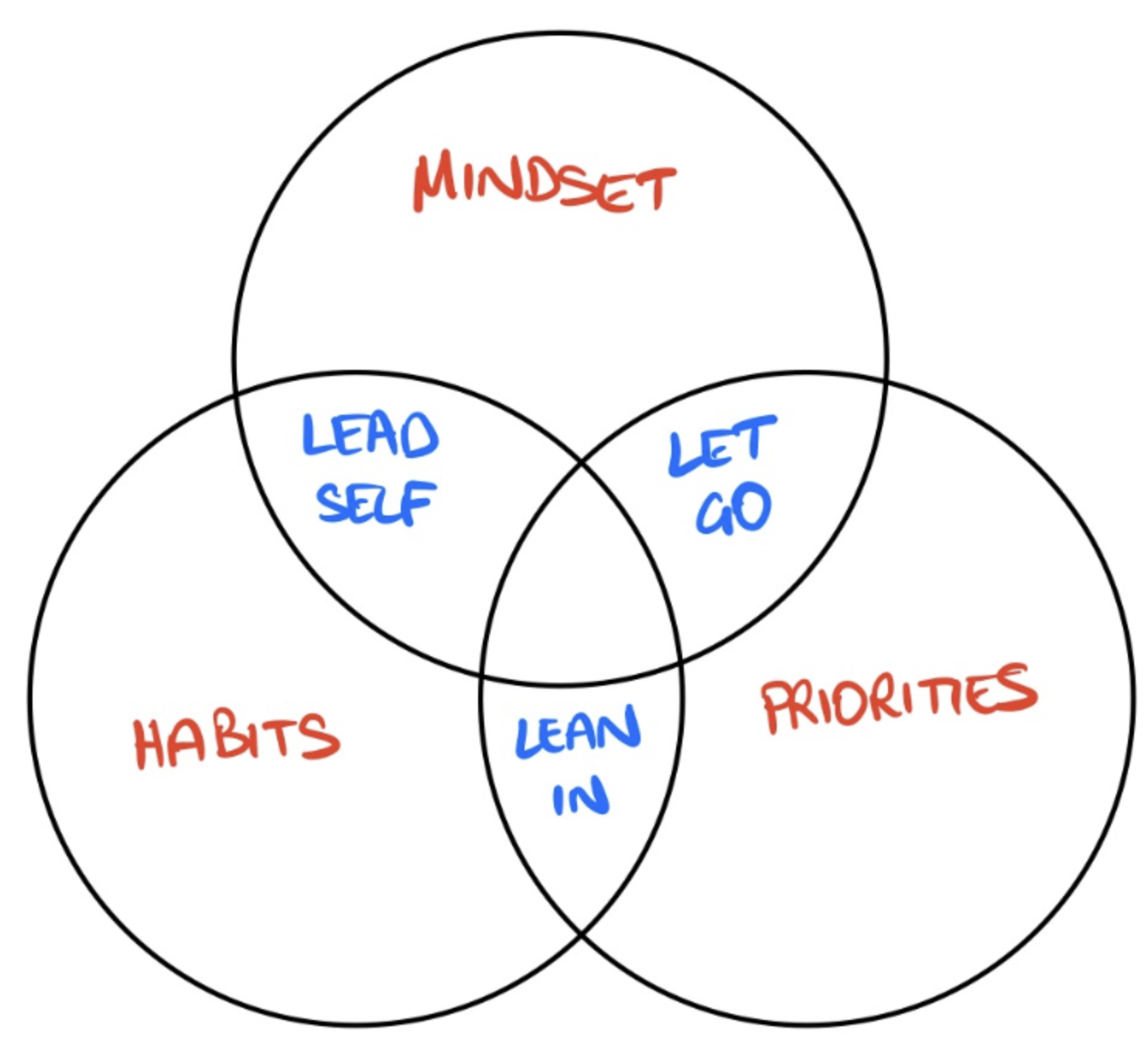
Understanding yourself as a system means asking different questions:
What conditions help me think at my best?
What pressure patterns do I default to?
Where do I lead with intention, and where do I react?
What impact do others experience, regardless of my intent?
This isn’t about self-analysis for its own sake. It’s about leaders being able to create more choice.
When leaders understand their own inner dynamics, they gain more range, more steadiness and more discretion over how they lead, especially when it matters most.
Why This Matters Now
The complexity leaders are currently navigating isn’t easing. If anything, it’s becoming busier, yet they are expected to lead in a more nuanced, more human, and more relational way.
The leaders who perform well over time aren’t just strategically capable; they are internally resourced. They know how to regulate themselves before they attempt to regulate the system. They measure themselves as carefully as they measure outcomes. Because when the inner game is understood and led well, the outer game follows.
A Moment to Pause
Before refining strategy or setting the next goal, take a moment to notice:
What 'condition' am I currently leading from, and am I at my best physically, mentally and emotionally?
Where am I leading with intention and clarity, and where am I pushing through on habit, willpower or autopilot?
If I continue to lead from this inner state, what is it likely to create, for me, and for those I lead (can I even answer this clearly and honestly for myself)?
You don’t need to change anything yet. But take a few moments to just notice.
Because clarity in leadership often begins not with doing more, not with continuously tweaking the strategy, but with understanding the condition you’re already walking in as a leader.
Need Some Help?

If you are looking to achieve different results this year with your leadership, let's chat and see if working together would be a good fit.
If you’d like to join me for a strategic leadership development programme this year (in Spain), are a woman leader or business owner looking for development and connection that will enable you to have more impact and greater results, or if you’d simply value some focused 1:1 time to accelerate your impact, I’d be honoured to partner with you.
I'd love 2026 to be your best year ever.